


Appearing in 2014, the Lexus NX quickly became a flagship model in the Japanese range, particularly in strategic markets such as North America and China where this SUV format is particularly appreciated. In 2021, despite a career already well underway and a facelift in 2017, the NX thus positioned itself on the third step of the podium of the best-selling Lexus models in the world, with 145,000 units sold out of a total of 760,000 all models combined. No need to specify that the renewal of the model is a crucial step for the expansion ambitions of the brand, which will undoubtedly be facilitated by the appearance of a rechargeable hybrid version, a first at Lexus.

Historical rationale
Lexus, a fairly young brand after all, since its creation dates back to 1989 with the appearance of a rather unexpected competitor on the luxury sedan market, the famous LS 400. exoticism in the technical choices made on each of its models, the Japanese brand has sold no less than 10 million vehicles across the globe in 30 years, a great success. If the main subject of this article is the arrival (rather the renewal) on the market of yet another SUV, a few small reminders are necessary to allow you to understand the legitimacy of the manufacturer in the premium SUV segment. Indeed, Lexus ventured into this field in 1996 with the LX, a more luxurious version of the Toyota Land Cruiser SW. But the real precursor, this is the well-known RX, which appeared in 1998 (a year before the BMW X5) across the Atlantic and in less than a year became the brand's best-selling model in the country. Hybridized from its second generation in 2005, it still carries today the values dear to the brand of differentiating luxury, relative efficiency and above all reliability. Evidenced by this comment posted by one of our readers on testing the RX450h in 2016.
And suddenly this NX350h, the same story in a smaller format? That's what we would like to believe but if it's the look of the latter that motivated me to offer it to you for testing, the preliminary reading of the test of the previous generation carried out by my esteemed colleague Jean -Baptiste had cooled me off somewhat. Go from crush to disillusion before even trying it? Not so sure, but let's get to the heart of the matter.

What is changing?
To be honest with you, I first believed when discovering the first images of the Lexus NX vintage 2022 to a second big facelift more than to a new generation. Coming back twice, mea culpa, this NX is indeed a real new car with its lot of new features and above all, 95% different parts compared to its predecessor. Phew, here I am reassured. A chance for the NX to rebuild its reputation within the blog can therefore be seen. But overall what is changing? Outside, we take the recipe from the previous one and we touch on everything without revolutionizing the whole: the mark undoubtedly of the achievement of maturity in the design of the brand. It is also the design that undoubtedly gives rise to the most clear-cut opinions about Lexus products: we love it or we hate it! Sharp lines, a huge trapezoidal grille and a recognizable daytime light signature. On this level, the new NX takes up absolutely all the codes dear to the brand while adopting a line generally similar to the first generation. The headlights are now in one piece, following the evolutions of the rest of the range. The grille is more imposing than ever while the hood adopts more marked ribs.

The profile is quite similar from one generation to another, with curved fenders and a profiled but not amputated glass surface, especially in the rear seats. Note this Y-shaped side rib in the middle of the rear protière to give muscle to the whole line. At the rear, two main changes to note:
- the disappearance of the Lexus logo in favor of chrome lettering, very premium a bit like Porsche or Range Rover products.
- the appearance of a fine light strip gives the NX a remarkable presence on the road, without doubt my favorite style element on this SUV!

Inside, it's a small revolution and it will take me more than a paragraph to go through everything. Say goodbye to the aging touch pad that is not very ergonomic and hello to the largest touch screen in the category (available from the second level of finish) of 14 inches, just that! All the ergonomics have been completely redesigned and the Lexus NX really gains in ease of use, while making the rest of the range look a lot old. The menus have been simplified and two shortcut buttons are permanently available to activate/deactivate the most frequently used driving aids. At the level of the transmission tunnel, a lot of space is saved and the number of buttons is reduced for easy reading of all the commands available. The gear selector decreases in size and operates more logically than before, with a tilt to the left then forwards or backwards to actuate 'D' or 'R' modes while the 'P' s operated by simply pressing the dedicated button. The “EV Mode” button to force 100% electric driving is slightly enlarged and positioned closer to the driver. The 3 “Eco”, “Normal” and “Sport” driving modes are still operated via a knob, now smaller but still ideally located. Lexus had the good taste not to digitize all of its orders. Thus, the temperature adjustment of the dual-zone air conditioning as well as the demisting of the windscreen, the rear screen and the mirrors remain instantly accessible via physical buttons.

On the mobile pairing side, Apple CarPlay is available wirelessly or via the two USB & USB-C sockets. Mobile inductive charging is easy to access via the small shelf in front of the cup holders. The latter can retract and reveals a small storage space and a more traditional cigarette lighter socket. The steering wheel and its controls have been completely revised with a design brought up to date and a less plastic finish than before. The two groups of left and right controls respectively group together the management of the multimedia content being played and the driving aids (adaptive cruise control / lane departure warning / lane keeping aid). Note that the change of parameters via its controls is not displayed on the dashboard but directly on the HUD (Head-Up Display = head-up display). In addition, the buttons detect the presence of your fingers but you still have to press them to activate each function, a little disconcerting to use but you get used to it.

In terms of colors and materials, we have the right in our test model to the Executive finish, the highest there is on the Lexus NX (unless you opt for the additional F Sport pack which affects the look, the suspension and driving profiles). We therefore have the right to beige leather (it appears more tobacco-colored in reality) on the seats, the storm doors and part of the central console as well as a matching roof. Very few hard plastics or almost none, at least not on the elements directly visible from the driver's seat. There are also black real wood inserts that look great, one more element that definitely makes me think that Lexus is the Japanese Volvo (Mazda to a lesser extent). little novelty, door handles that disappear in favor of a small lever on which you just have to press to open the doors. Practicality at first questionable but in the end you get the hang of it very quickly and this makes it possible to couple the opening of the doors to the “Safe Exit Assist” which detects vehicles and warns you via an audible signal in the event of immediate danger when exiting. opening, you had to think about it. The exterior door handles are therefore fixed and can only be opened by pressing a button on the inside surface of the handles. Practicality at first questionable but in the end you get the hang of it very quickly and this makes it possible to couple the opening of the doors to the “Safe Exit Assist” which detects vehicles and warns you via an audible signal in the event of immediate danger when exiting. opening, you had to think about it. The exterior door handles are therefore fixed and can only be opened by pressing a button on the inside surface of the handles. Practicality at first questionable but in the end you get the hang of it very quickly and this makes it possible to couple the opening of the doors to the “Safe Exit Assist” which detects vehicles and warns you via an audible signal in the event of immediate danger when exiting. opening, you had to think about it. The exterior door handles are therefore fixed and can only be opened by pressing a button on the inside surface of the handles.
A final word on the simply excellent habitability. The 2 cm more compared to the first generation NX benefit the rear seats. My 1m84 has no trouble finding its place behind the driver's seat (adjusted to my measurements) with a margin of another good 15 centimeters at knee level and 4-5 in height. Lexus also had the good taste to add two USB-C ports, but also to reduce the size of the transmission tunnel as much as possible, so that an adult can easily take place in the central seat of the rear bench. To top it all off, a 555-litre trunk is available to you, which places the NX350h in the upper range of the category.

An offer in tune with the times
If the second generation of Lexus NX does not sign the death warrant of traditional hybridization, it adds a string to its bow by offering for the first time a rechargeable hybrid offer. Thus, two engines are now available in France:
- the NX350h (in FWD or 4WD) with so-called “simple” hybridization: 190 hp 2.5 L 4-cylinder Atkinson cycle petrol engine combined with a 182 hp electric motor + a 44 hp electric motor on the rear axle for the 4WD version . Combined power of 244 hp regardless of transmission mode.
- the NX450h+ (in 4WD only) plug-in hybrid (18kWh battery): 4-cylinder 2.5 L Atkinson cycle petrol engine, 185 hp combined with a 182 hp electric motor + a 44 hp electric motor on the rear axle. Combined power of 309 hp .
In terms of finishes, the offer remains identical to that of the first generation NX with a breakdown as follows:

Small focus on our test version: it is a NX350h 4WD (not permanent) in Executive finish, Payne Gray exterior color with beige leather interior (yes yes, it is beige according to the configurator).
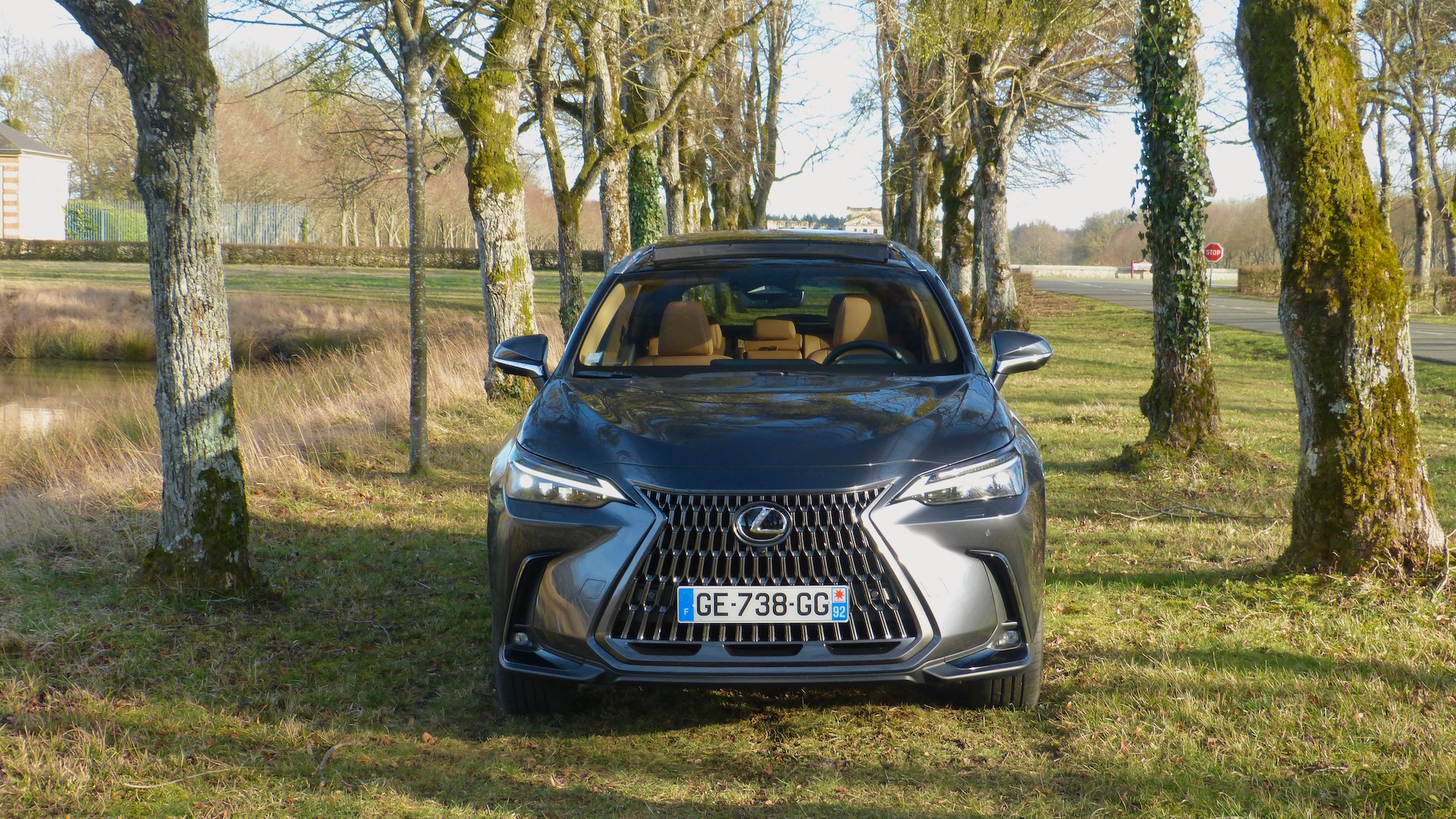
On the road: surprising in many ways
Climbing aboard, the attention paid to ergonomics is palpable. I place my smartphone on the receptacle positioned at the bottom of the center console, the induction charging starts instantly while the Apple CarPlay pairing is done quite naturally. A few adjustments to the driving position and here I am ready to hit the road in an already familiar environment. No endless settings to find a dashboard display mode that suits me, only three possibilities are available to you and group more or less the same information (note the absence of engine speed indication). I play a little with the 64 colors available for the ambient lighting and basta, I will not touch the vehicle parameters once again, and in 2022 it is very appreciable without feeling aggrieved in terms of equipment. The first kilometers are obviously done in a 100% urban environment and I take full measure of the size of the machine: 4m66 long and 1m87 wide, it's starting to do. You quickly feel the difference compared to the average French car fleet, and this impression of traffic domination that so many users seek through SUVs is still as appreciable as ever. And no offense to ecologists-bobos-anti-SUV-because-it-stinks-and-it-pollutes, Lexus announces a combined consumption of 6.2 L / 100 kms, not bad for a weight of 1790 kg empty . It's officially 0.9 L less than my MX-5 ND 184 hp which weighs nearly 800 kg less. We will verify these promising figures at the end of this essay. The first kilometers are obviously done in a 100% urban environment and I take full measure of the size of the machine: 4m66 long and 1m87 wide, it's starting to do. You quickly feel the difference compared to the average French car fleet, and this impression of traffic domination that so many users seek through SUVs is still as appreciable as ever. And no offense to ecologists-bobos-anti-SUV-because-it-stinks-and-it-pollutes, Lexus announces a combined consumption of 6.2 L / 100 kms, not bad for a weight of 1790 kg empty . It's officially 0.9 L less than my MX-5 ND 184 hp which weighs nearly 800 kg less. We will verify these promising figures at the end of this essay. The first kilometers are obviously done in a 100% urban environment and I take full measure of the size of the machine: 4m66 long and 1m87 wide, it's starting to do. You quickly feel the difference compared to the average French car fleet, and this impression of traffic domination that so many users seek through SUVs is still as appreciable as ever. And no offense to ecologists-bobos-anti-SUV-because-it-stinks-and-it-pollutes, Lexus announces a combined consumption of 6.2 L / 100 kms, not bad for a weight of 1790 kg empty . It's officially 0.9 L less than my MX-5 ND 184 hp which weighs almost 800 kg less. We will verify these promising figures at the end of this essay. it's starting to do. You quickly feel the difference compared to the average French car fleet, and this impression of traffic domination that so many users seek through SUVs is still as appreciable as ever. And no offense to ecologists-bobos-anti-SUV-because-it-stinks-and-it-pollutes, Lexus announces a combined consumption of 6.2 L / 100 kms, not bad for a weight of 1790 kg empty . It's officially 0.9 L less than my MX-5 ND 184 hp which weighs almost 800 kg less. We will verify these promising figures at the end of this essay. it's starting to do. You quickly feel the difference compared to the average French car fleet, and this impression of traffic domination that so many users seek through SUVs is still as appreciable as ever. And no offense to ecologists-bobos-anti-SUV-because-it-stinks-and-it-pollutes, Lexus announces a combined consumption of 6.2 L / 100 kms, not bad for a weight of 1790 kg empty . It's officially 0.9 L less than my MX-5 ND 184 hp which weighs almost 800 kg less. We will verify these promising figures at the end of this essay. Lexus announces a combined consumption of 6.2 L / 100 km, not bad for a weight of 1790 kg empty. It's officially 0.9 L less than my MX-5 ND 184 hp which weighs almost 800 kg less. We will verify these promising figures at the end of this essay. Lexus announces a combined consumption of 6.2 L / 100 km, not bad for a weight of 1790 kg empty. It's officially 0.9 L less than my MX-5 ND 184 hp which weighs almost 800 kg less. We will verify these promising figures at the end of this essay.
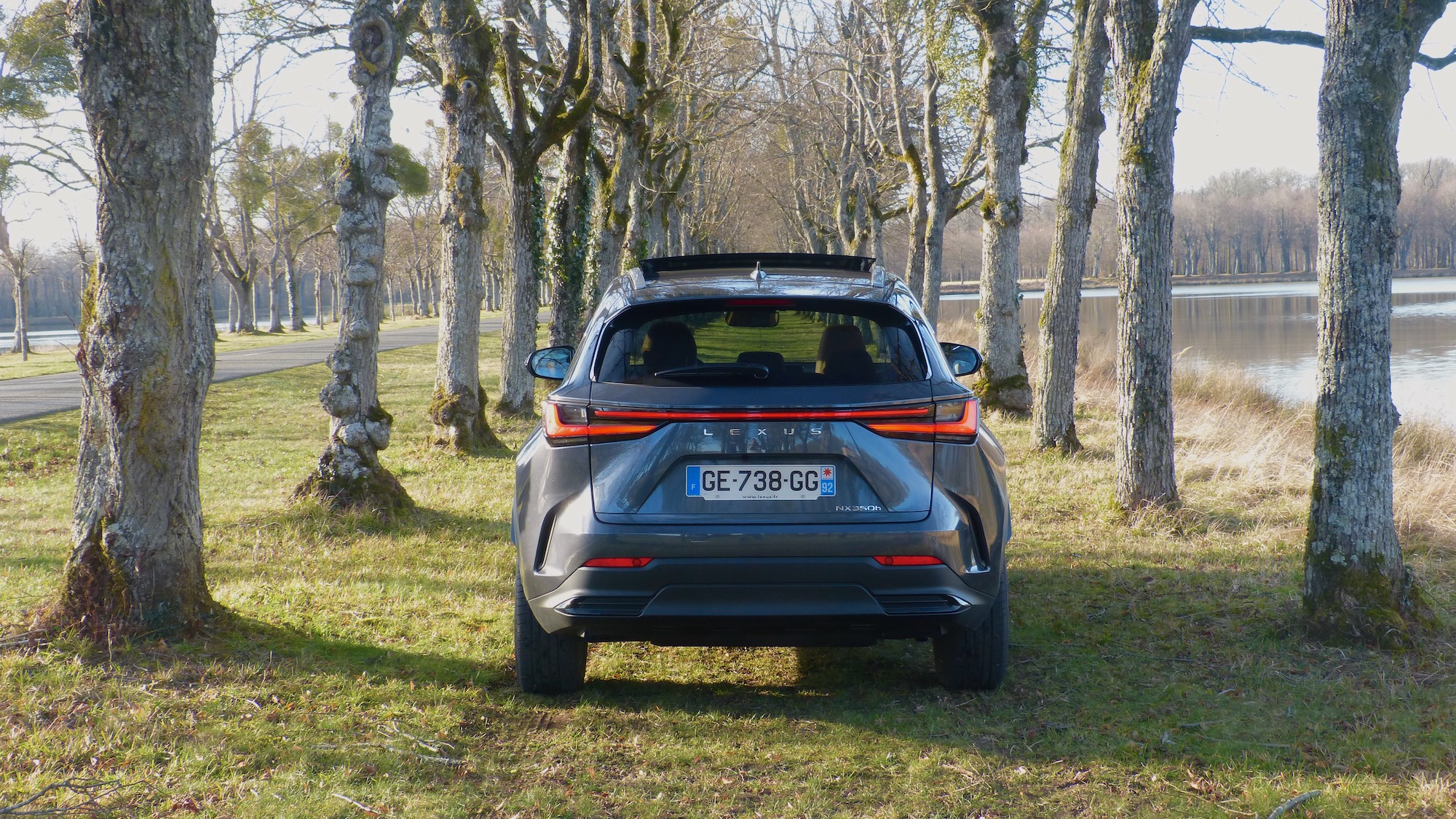
In town, as I said, consumption is not soaring, on the contrary, the restart phases and all traffic jams are automatically carried out in all-electric mode without having to force the EV mode via the dedicated button, enough to relieve the atmospheric 2.5 L of any opportunity to over-consume. Comfort on board is imperial just as silence is golden. The damping remains very flexible despite the 20-inch rims specific to our finish and the double glazing protects you from any external noise aggression, enough to approach your daily urban journeys differently. If you also play your “Morning Positive Attitude” playlist on your favorite audio streaming platform very faithfully transmitted by the excellent Mark Levinson audio system, well-being is at its peak.
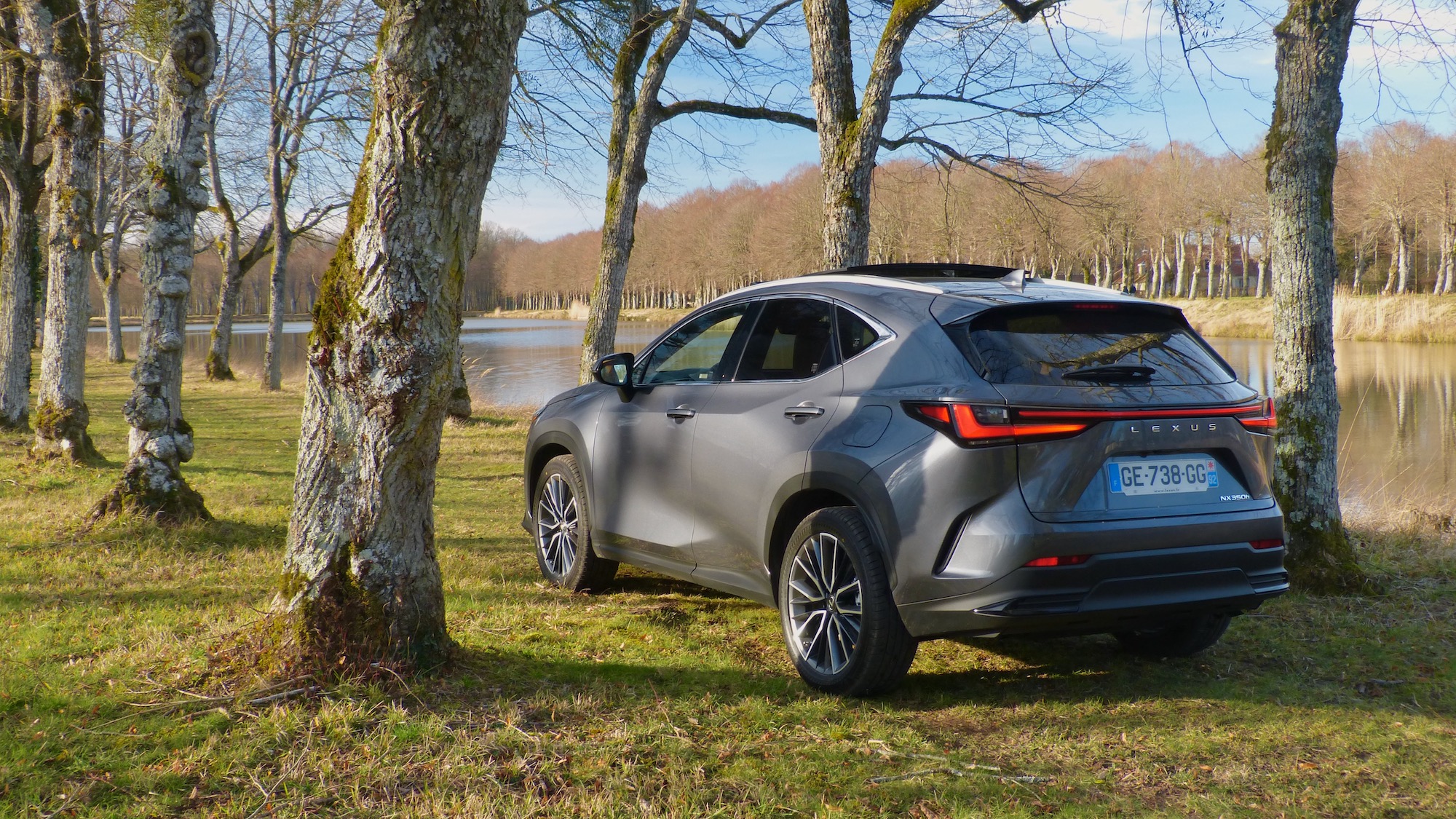
On the motorway, the toll exits are only a formality since the exercise from 0 to 100 km/h is dispatched in 7.7 seconds, correct. Moreover, during these phases of free acceleration, the characteristic and sometimes unpleasant side of the e-CVT (continuously variable) gearbox is revealed with the engine which is positioned at an optimal speed (often quite high) to obtain the best performance ratio. /consumption. The result is a disconcerting feeling of disconnection between the engine, which seems to grind in a vacuum, and the wheels. If you look twice, the speed increases however very frankly, we are far from being present in a winded SUV even if this is not its real vocation. Moreover, at 130 km/h, the efficiency cannot really be described as optimal since we are bordering on the average 8.0 L / 1 to km.
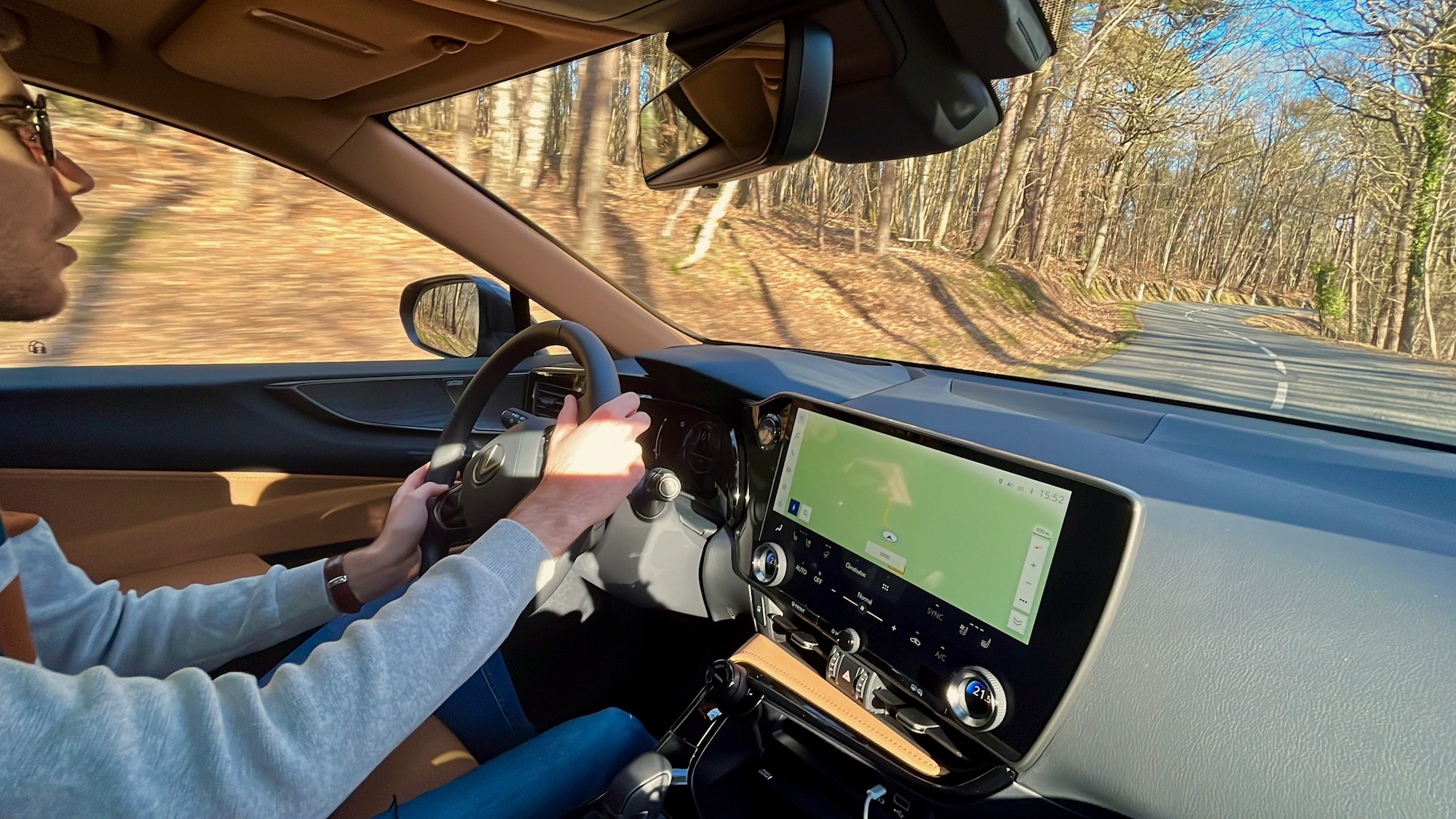
It is ultimately on the secondary network that the NX350h reveals its full potential. With a speed varying between 80 and 90 km/h and constantly changing terrain, the Japanese SUV has the perfect playground to demonstrate the full extent of its know-how. Alternating brilliantly between phases of energy recovery + freewheeling downhill, crossing small towns in 100% electric mode and gentle re-accelerations to resume a cruising speed below 90 km/h, the NX350h easily displays average fuel consumption around of 6.0 L / 100km, without forcing, a real feat in my opinion and the opportunity for the Japanese manufacturer to dedicate a technology that is already well proven. I found myself activating the Sport mode on a winding course to cut it less than 2 km later.
The good solution
While enthusiasts of dynamic driving will find their account more on the side of the Germanic proposals, the Lexus NX350h remains to this day without any direct competition on the Premium SUV market thanks to a completely unique hybridization offer where its rivals only offer a rechargeable hybrid solution (joined by the NX450h+). Complete equipment, roominess, quality of materials, Premium services and even frugality at the pump, absolutely everything is there to delight a demanding clientele. It remains to convince you of the very daring design, with marked biases and the brand philosophy in assumed shift. As you will have understood, this Lexus NX really convinced me, providing a solution for those like me who do not (yet) have a home charging solution.
Some numbers
Dimensions: 4660x1870x1670
Empty weight: 1790 kg
Trunk volume: 555 L
Tank volume: 55 L
Combined consumption announced (WLTP): 6.2 L/100 km
Average CO2 emissions announced (WLTP): 139 gCO2 / km
Engine: 4-cylinder petrol 2487 cc Atkinson cycle + 2 electric motors
Maximum combined power: 244 hp at 6000 rpm
Maximum torque: 239 Nm at 4300 rpm
Maximum speed: 200 km/h
0 to 100 km/h: 7.7 sec


